Can the Next Bad Bunny Come Out of SWANA?
باد باني الجاي رح يطلع من عنّا؟
The culture was never emerging. The question is who owns the pipes, who gets to travel, and who gets paid when a SWANA artist finally goes global.
The only other place
On 27 October, at the IFPI's first Music Industry Day in Cairo, the man who keeps the global recording industry's books made the comparison we had been chasing all week. "In the last four or five years, this region has tripled in size," John Nolan, the IFPI's chief operating and financial officer, told the room. "The only other place in the world where I've seen that is Latin America."
Latin America's growth produced Bad Bunny. In February his Debí Tirar Más Fotos became the first Spanish-language album to win Album of the Year at the Grammys, and a week later he headlined the Super Bowl. If our region's curve looks like Latin America's, the obvious question follows: where is SWANA's Bad Bunny, and what is standing between that artist and the world?
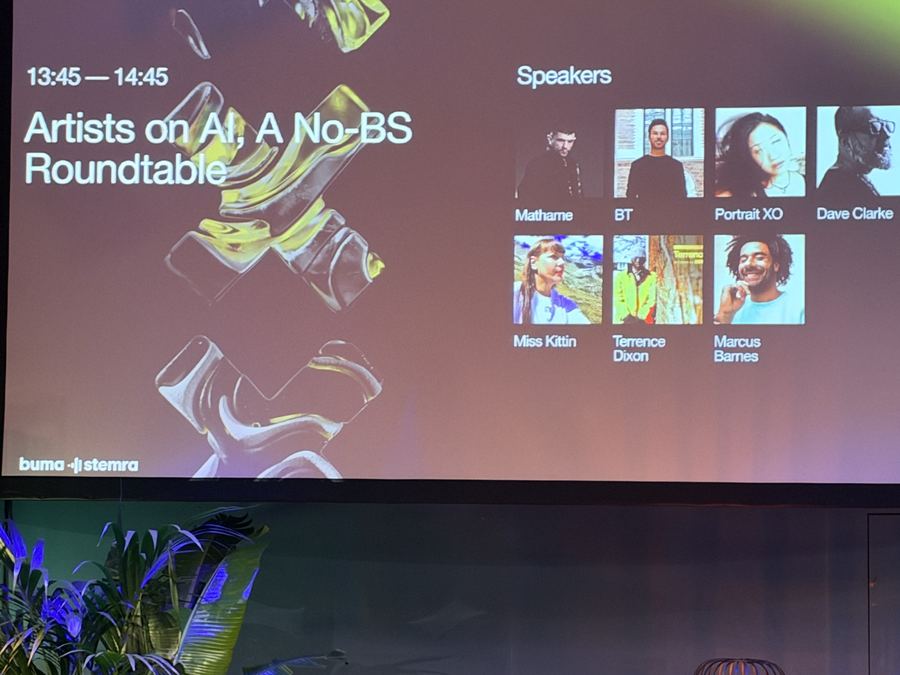
We spent five days at Amsterdam Dance Event (21 to 25 October) asking it in every room we could get into: the SWANA panels, and the ones you wouldn't expect us in.
I went to ADE with one question and a voice-memo app. I sat in the rooms about our region and in the rooms about everything else: Brazil, AI, the Global South, the people building the pipes the whole industry runs on. What follows is what those rooms told me, checked against the data.
Our answer is yes. But not by the route the industry is watching, and not until a few things change. The next Bad Bunny will come from a scene that was built at home and carried abroad on infrastructure SWANA owns. And it may well be a DJ.
The culture was never emerging
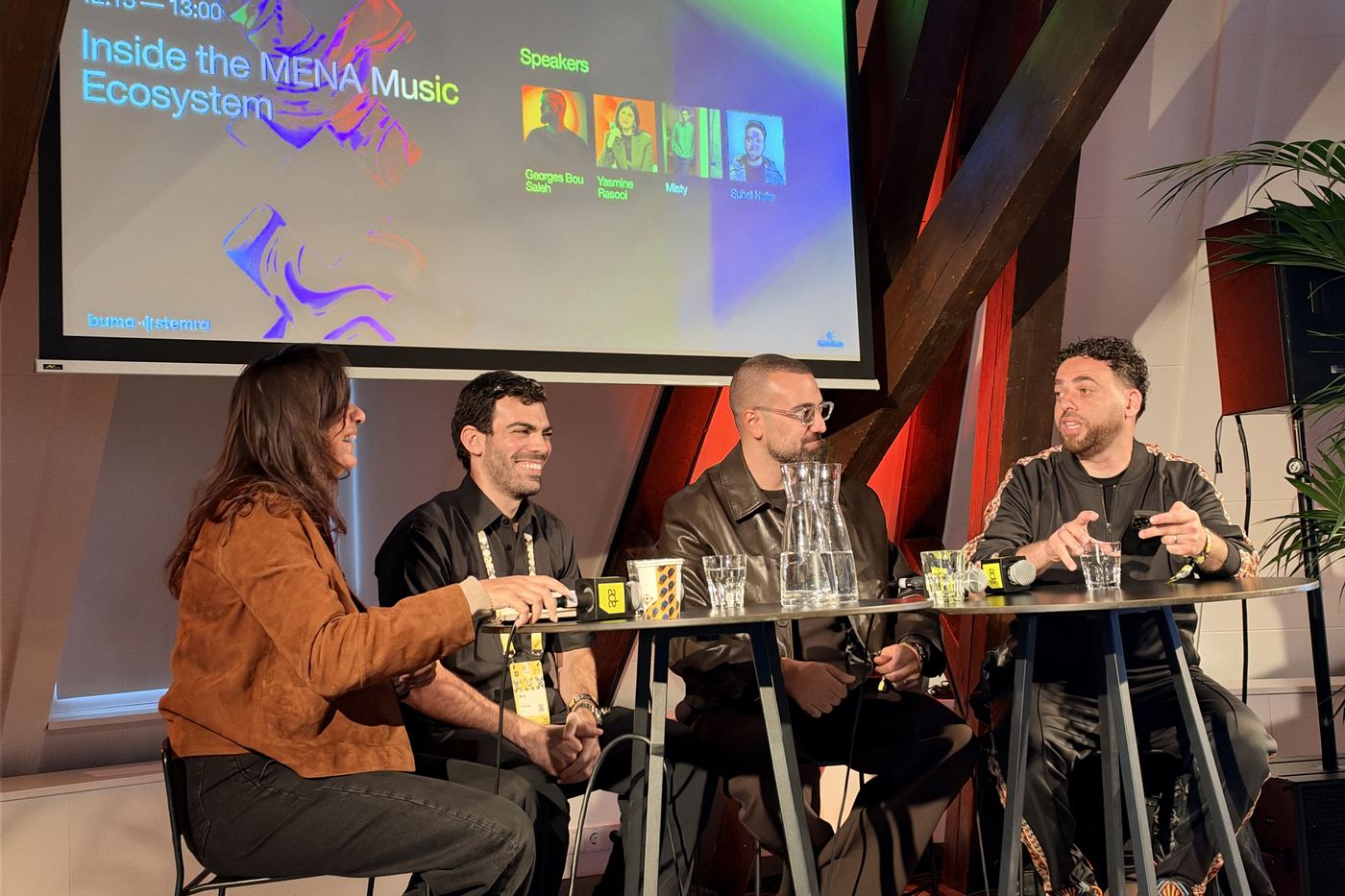
"We're not an emerging market," Suhel Nafar, who runs EMPIRE's West Asia and North Africa division, said on two separate ADE panels. "The charts and the technologies are the emerging new tools that are coming to the region." In a video interview with SceneNoise at ADE he went further: Fairuz and Umm Kulthum were "already top charting before charts were a thing," and "us as a region, West Asia, North Africa, we've been killing it for a long time."
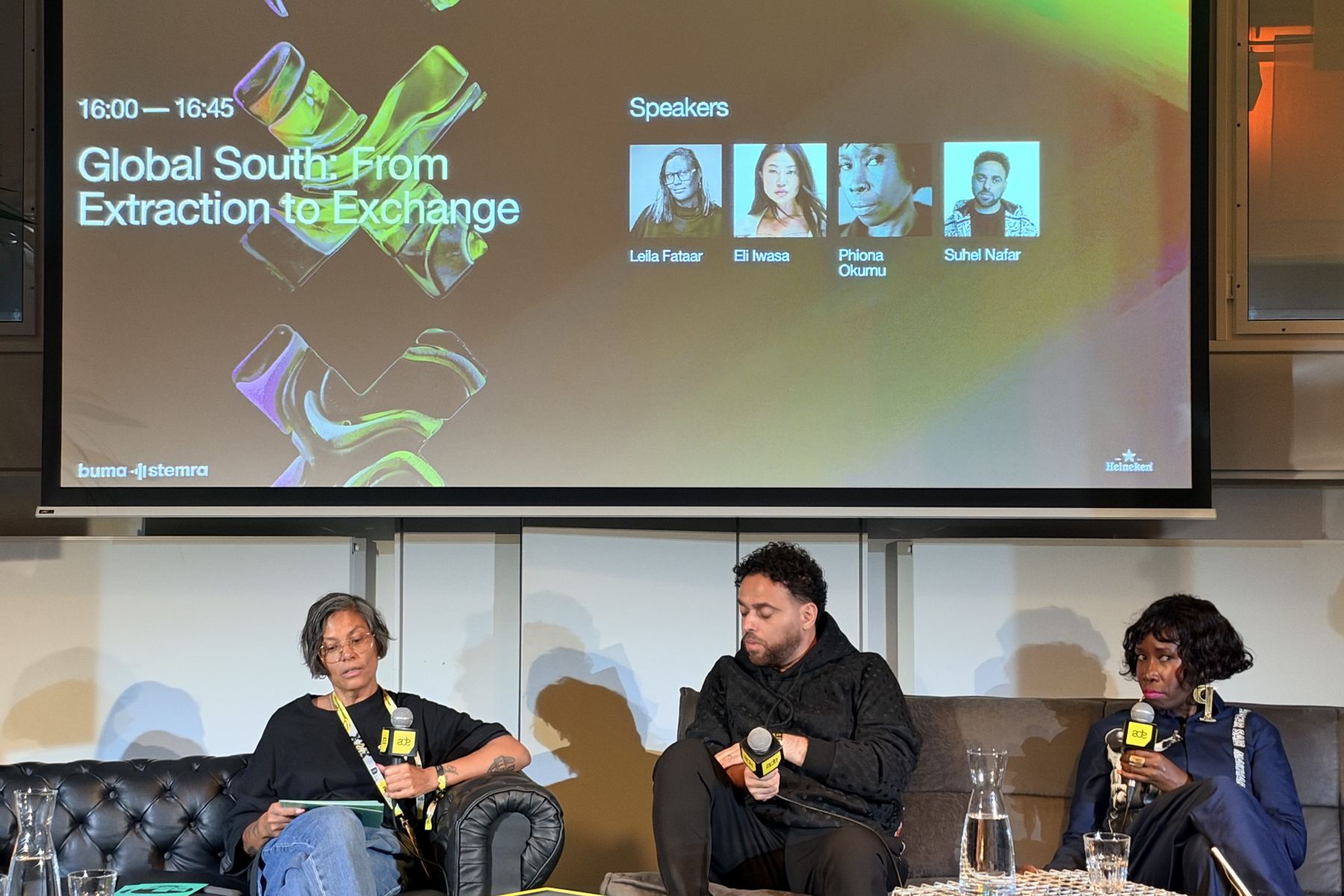
ADE's own programme agreed. The brief for "Global South: From Extraction to Exchange" opened with the line "The Global South isn't an emerging force in music," and Suhel told the moderator, Leila Fataar, that her introduction "should have been a mic drop."
It's becoming a shared industry line, so it's worth testing rather than repeating. The numbers mostly hold. The IFPI's Global Music Report puts the region's recorded music revenue up 15.2% in 2025, joint second-fastest in the world behind Latin America. Since the Official MENA Chart launched in 2022, Egyptian artists have taken the No. 1 spot eleven times.
And yet the data industry still doesn't see us as a market of our own. Chartmetric's Global Music Pulse, published last month, maps "five very different ways music goes global" through five fast-moving markets: Mexico, Japan, Brazil, India and Nigeria. SWANA isn't one of them. That isn't because nothing is moving here. It's because the culture is mature and the infrastructure that would make it legible, and bankable, is not yet ours. That gap is the subject of this piece.
Home first
Start with how Bad Bunny actually did it. In the summer of 2025, at the peak of his fame, he didn't open with a stadium run abroad. He played 31 shows at the Coliseo de Puerto Rico in San Juan, and the first nine were for Puerto Rico residents only, with tickets handed out in person at nine locations across the island. More than 500,000 people came; one University of Puerto Rico economist put the economic activity at no less than $176.6 million, a figure she called "very conservative." He never switched to English. The world came to him.
The same instinct ran through every SWANA room at ADE. "It's always self-discovery before audience discovery," Suhel said. "You don't need to go reach out to global when you yourself still didn't discover yourself." Speaking as an artist himself (he co-founded the Palestinian hip-hop group DAM), he added: "We were focused on just getting the word to our people first." Elsewhere he put it as a choice of water: "We don't always have to go jump and swim in an ocean. We can enjoy the pool too."
Rolbac, the Beirut DJ, said it about his own career. "When I started playing Beirut, I wanted to prove a point that I could become my best without leaving," he told SceneNoise at ADE. "Whether I play in Europe or South America, every time I come to Beirut, they're my favourite gigs. I love playing for my people." On ADE's Egypt panel, the artist and booker Aly Goede: "The most important thing is to grow locally." In Marrakech, Marjana Jaidi is replacing the three-day Oasis Festival with Cultivora, a permanent venue, because "having a permanent home really allows us to create a consistent quality, and to have that last all year round."
The data supports home first, and it also warns against stopping there. Brazil, in Chartmetric's numbers, is minting stars at home: 127 artists in its top "Superstar" tier this year, with 82.4% of its top ten artists' YouTube subscribers inside Brazil. Its foreign chart entries, meanwhile, fell 44.8% between 2021 and 2025. Nigeria is the mirror image: only 11.5% of its top ten artists' YouTube subscribers are at home. Reach without a home base, and a home base without reach, are both ways to stall. Home first is the foundation, not the strategy.
We don't always have to go jump and swim in an ocean. We can enjoy the pool too.
Suhel Nafar, EMPIRE
Mature culture, owned elsewhere
If the culture is mature, follow the money, and the picture changes.
"Every stream in the UAE will probably take 20 equivalent streams in Egypt to match that same value of revenue, because of currency inflation," Nolan said in Cairo. That one sentence explains a lot. Egypt produces the region's biggest exports, yet in Spotify's 2025 Loud & Clear report more than 80% of Egyptian artists' royalties came from listeners outside Egypt. Saudi artists generated about $3.5 million on Spotify in 2024, with more than 90% from abroad. Nigerian artists generated about $43.8 million there in 2025. Home first only works if home can pay, and right now, in much of the region, it can't pay enough.
Then there's who collects. Suhel's favourite example is the Palestinian wedding singers who battle in village weddings, "four bars, four bars, four bars." People filmed them, uploaded the audio to streaming platforms "and it's generating money while the wedding singers didn't even know about it," he said on the Global South panel. "Let me go fix that infrastructure." By his account, his team signed the studios and performers, cleaned the metadata and distributed it properly, and six months later the clips became a US TikTok trend that finally paid the people in them. Before the next breakout is a talent problem, it's a rights-and-metadata problem.
The deals are changing too. "Ten years ago, we were negotiating distribution deals," Denis Ladegaillerie, Believe's founder and CEO, told ADE. "How much are you going to pay us for the music? Now, this is no longer the case." Distributors now negotiate how much marketing they can drive inside Spotify, YouTube and Apple Music. Whoever sits at that table decides which artists get pushed. For most of SWANA's independents, that seat belongs to someone else.
The diagnosis came from both ends of the industry in the same week. "We need to get the economics right, get the infrastructure in place, and work closely with the government on new royalty policies," said Nolan. "Really important for us to also fix the business infrastructure side of the industry," said Suhel.
They agree on what's missing, too. On ADE's Egypt panel, Aly Goede put it plainly: "We have amazing talent, and there are many collectives doing great things, but there aren't enough labels or agencies." Suhel makes the same point: there aren't enough of the people and companies who build careers. Most of all, there aren't enough that can carry an artist across a border: agencies that export, and rights and data clean enough to be paid for anywhere.
Correction · 30 Oct: An earlier version of this piece quoted a SceneNoise interview in which Suhel appeared to say the region already has enough managers, labels and artists, and set that against Aly Goede's view. Suhel has since told Shabakeh he meant the opposite: there aren't enough, and the line was lost in translation. He and Aly agree. We've corrected the passage.
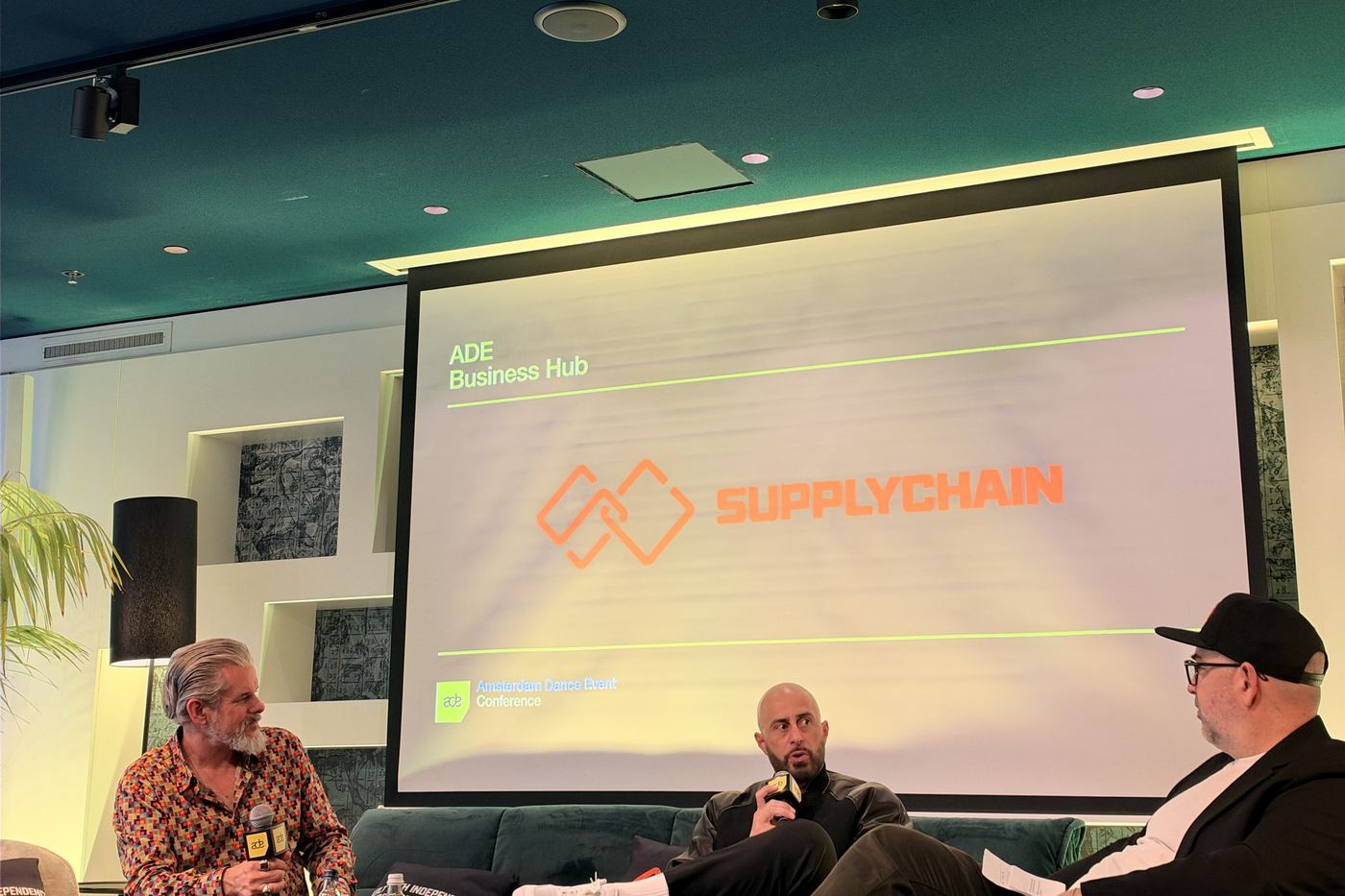
Some of the people building those pipes come from our own diaspora. Ghazi, the Palestinian-American founder of EMPIRE, launched Supply Chain at ADE: infrastructure for independent music companies, headquartered in Amsterdam partly because, he said, the Netherlands is favourable for cross-border royalty withholding, "a serious issue in the royalties community." He describes it as neutral by design. "If you were Mercedes and I was BMW, there's no world in which Mercedes allows BMW to manufacture for it," he said. "If iOS is a walled garden, this is Android." EMPIRE's own system, he told the room, "is gonna get scrapped" next year, and EMPIRE will "join Supply Chain too," with "no benefit to EMPIRE or loss to EMPIRE."
That's the right instinct, and it raises the right question. Ghazi also described private-equity firms "buying stuff that's in the EMPIRE system right under my nose without telling me," which is exactly how much information sits in the pipes. When the same founder owns a label and the infrastructure its competitors run on, the firewall between the two is the whole product. Supply Chain's promise to SWANA's independents will be judged on how clearly it shows that firewall, not on the logo.
Who the stages are for
The region's festival boom is real, and it is mostly an import business. At MDLBEAST Soundstorm last December, every headliner was international: Post Malone, Benson Boone, Cardi B, Calvin Harris, Halsey, Pitbull. Arab artists played the Park stage and a new stage built for Khaliji and regional music, which is progress. Two of them, TUL8TE and Zeyne, release music on MDLBEAST's own label.
Ask a promoter and you hear the word "balance." "For any music festival in Egypt, it's important to showcase local talent," Aly Goede said. "With Sandbox, having increasingly big names allows us to do that, but there has to be a balance." MDLBEAST says the same. Asked by Shabakeh in the public Q&A at ADE's "Behind the Booking" panel whether the festival puts international headliners ahead of local talent, Anaïs D'Olivat, its head talent buyer, said they are doing their best to tread the line between both. Ganz, whose companies run some of Egypt's biggest events, is candid about the model: "When we started, there was nothing in Egypt. I was going to Spain and I was influenced by Ibiza and Madrid. I thought, why not in Egypt? I want to bring these big shows to my country."
Ask an artist and you hear a different word. "We see local talent opening for international DJs, and while you may think that in itself is an opportunity, it's just for the flyer," Zeina, the artist and founder of Unfamiliar, said on the Egypt panel. "Cultivating local artists in a way that puts them in focus is what a 'good opportunity' means."
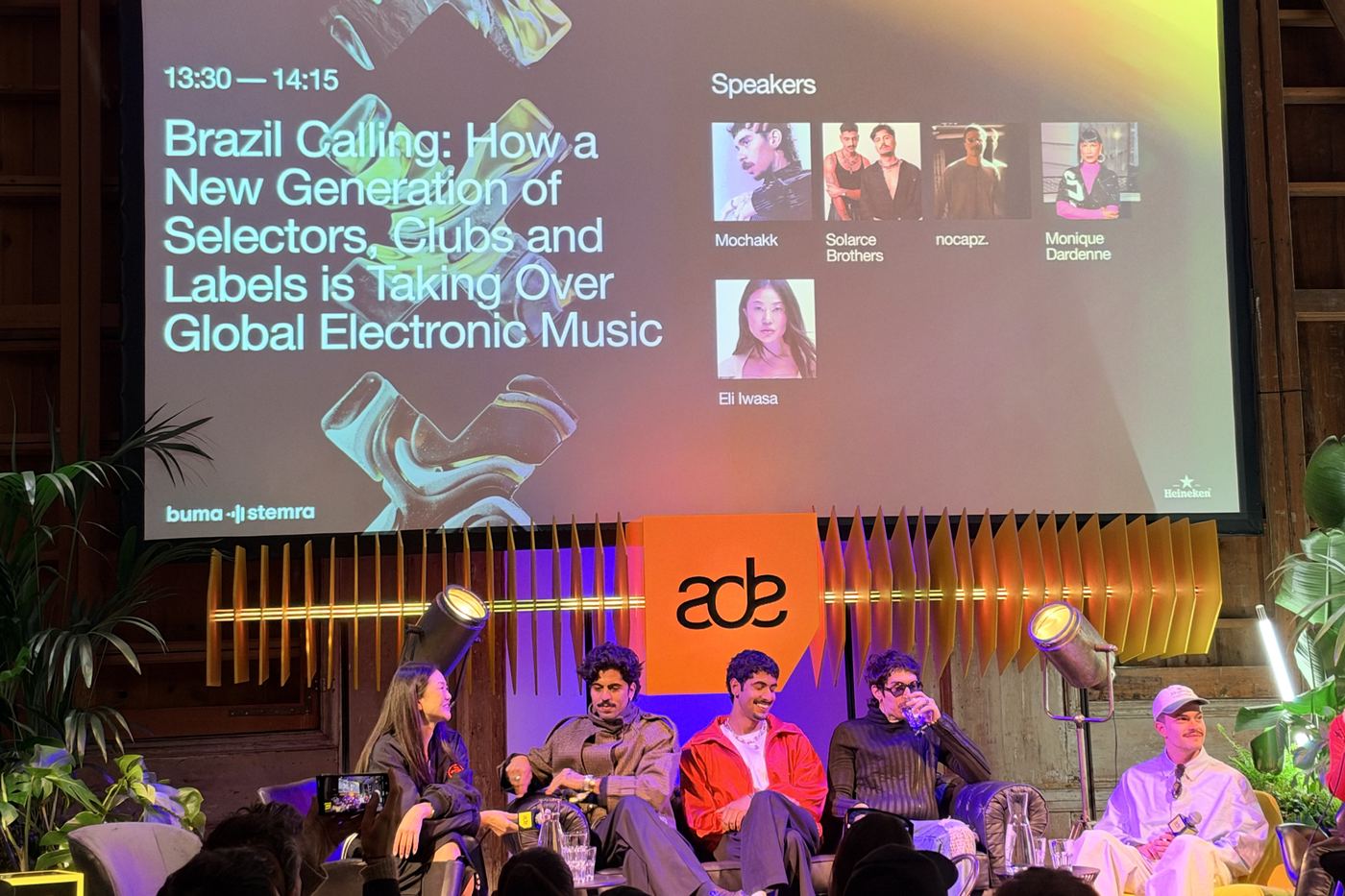
Brazil has a working answer. Mochakk, the Brazilian DJ who has become one of club music's biggest names, told ADE that his Mochakk Calling events abroad follow one rule: "We always have a Brazilian act playing on the editions we do abroad. We always bring people over." His label, MOTRAXX, began as a temporary home for a few of his own records and became a platform for new Brazilian producers. That is infrastructure built from inside the booth. Which SWANA headliner has a rule like that?
It's just for the flyer.
Zeina, founder of Unfamiliar, on ADE's Egypt panel
Blocked at both ends
Bad Bunny's island has no visa wall between it and the US market. Ours has walls in every direction.
Outbound, the numbers are stark. In European Commission data, 31% of Algerian applications for a Schengen visa were refused in 2025, against a 14.6% global average. In 2024 the rate was 25.7% for Egyptians, 20.1% for Moroccans and 5.9% for Saudis. Within the region it's no easier. Speakers on ADE's Egypt and Beirut panels said many people from their scenes couldn't make it to Amsterdam because of visas, and called it absurd that an Egyptian artist still needs a visa to play Morocco, with the same wall between Lebanon and Egypt. When Suhel and MC Abdul's team wanted fans to travel to hear Abdul's album before release, "there were some issues with [the] visa situation. We couldn't travel with [him], so we changed the strategy." Zeyne's European tour this spring was postponed by the war on Iran.
At the Egypt panel the message was simple: we need a united front. Egypt has some of the best music exports in the region right now, and its artists still can't move freely through North Africa. That is ridiculous, and it's a policy problem, not a talent problem.
Inbound, the wall is fear. "The myopic view of the world's media on what is happening in the region is putting doubt in an artist's mind: am I safe to travel?" said Steve Hogan, the WME agent, on ADE's live-music panel.
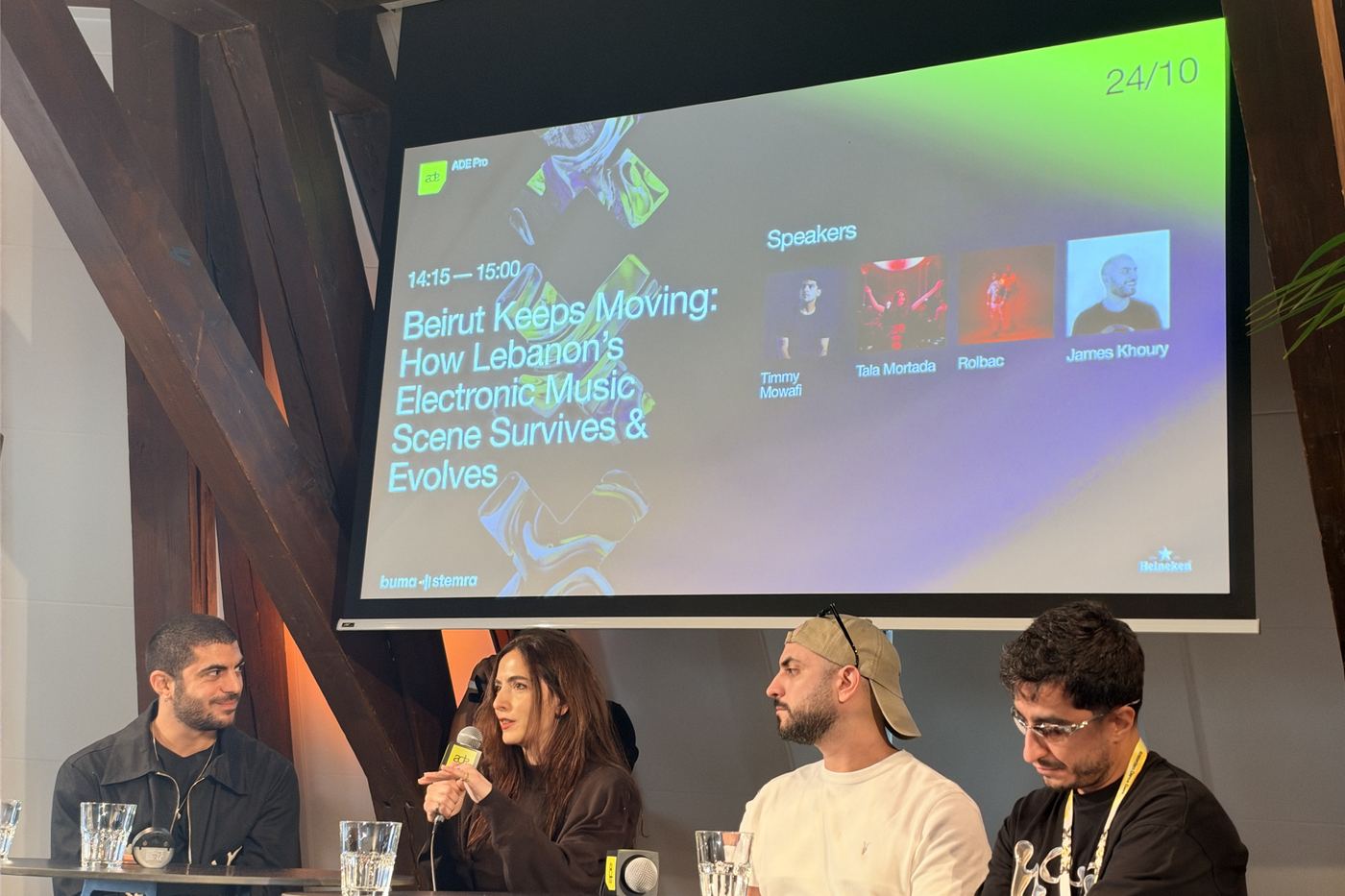
And at home, the ground keeps moving. Lebanon's promoters described booking an international act that once cost a thousand dollars, 1.5 million Lebanese pounds, and now costs 90 million. "Every time something happens, we have to start again," said Tala Mortada of Factory People. In Egypt, a country of more than 100 million, "only a fraction go out regularly," said Ganz, "so it is difficult to keep a venue alive without a sustainable crowd."
Brazil knows a version of this. Mochakk said many of the producers he champions are "not being able to leave the country and really put themselves out there." Brazil's answer was a superstar carrying others out. SWANA's version has visas stacked on top of the money.
The routes that already work
If SWANA isn't on Chartmetric's map yet, the five markets on it are still instructive.
Mexico is the closest model, and closer than Puerto Rico. Its export machine is a regional network that shares one language and pushes several genres at once, from corridos to reggaeton, and only about a third of its top artists' YouTube subscribers are in Mexico. SWANA has the shared language across more than 20 countries. What it lacks is free movement, shared payments and shared data.
Punjab is our comparison case for a reason. Diljit Dosanjh became the first Punjabi artist to play Coachella in 2023, and this year the first Punjabi headliner at Madison Square Garden and Wembley Stadium, which sold out in under 48 hours. India's foreign Spotify chart entries grew from 1,593 to 7,736 between 2021 and 2025. Punjab got there with a diaspora that shows up. SWANA has one too.
And there is a route that doesn't run north at all. "Traditionally it was always the other way: oh, we want to export to the North," Leila Fataar, who grew up in South Africa, said on the Global South panel. "The talent there has always been so incredible, but no access." Meanwhile the North is shrinking as a share of the top: the US share of Chartmetric's Superstars fell from 45.1% in 2021 to 33.1% this year. The door to the North is no longer the only door.
Three routes: our shortlist
We're naming names, as three different routes rather than one prediction. Each would need something to be true.
TUL8TE
The Egyptian singer, guitarist and producer built it in Cairo. "Garee2a Awy" held No. 1 on Billboard Arabia's Hot 100 for eight weeks; his COLORS performance has passed 71 million views; he has more than 800 million career streams. In November he plays six North American dates, from Silver Spring to Anaheim. What would have to be true: a team and rights structure that can carry him beyond the diaspora rooms without sanding off what made him.
Dystinct
Belgian-Moroccan, born near Antwerp and based in Amsterdam since he was 18, he made "Ghazali," the anthem of Morocco's 2022 World Cup run, and "Spider" with Gims went to No. 1 in France and French-speaking Belgium. His passport and the Francophone market do the work visas won't. What would have to be true: crossing from the diaspora into markets that don't share his languages.
Elyanna
The Palestinian-Chilean singer from Nazareth moved to California as a teenager, is managed by Wassim "Sal" Slaiby's SALXCO and was one of the first signings to Universal Arabic Music. She played the first all-Arabic set in Coachella's history, sang on Coldplay's "We Pray" and is on the 2026 World Cup soundtrack. Hers is the route that complicates "home first." What would have to be true: the global machine amplifying her without flattening her.
Zeyne
The Palestinian-Jordanian singer-songwriter whose debut album Awda came out last year, and who has written for Elyanna.
Or maybe it's a DJ
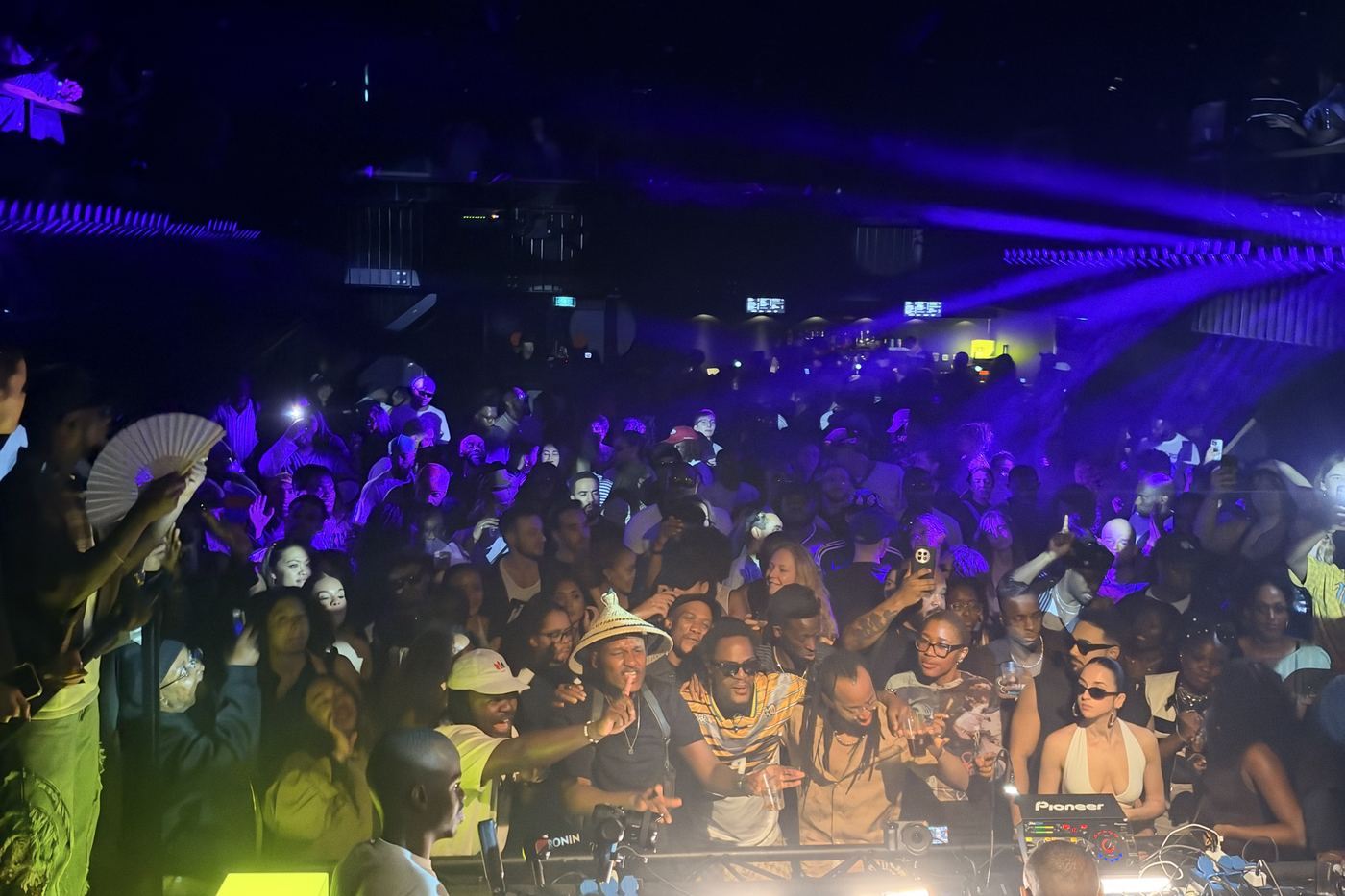
The Bad Bunny frame assumes a singer. ADE made a strong case that it might not be.
Club music crosses the language barrier that pop has to climb. "People like it abroad even without understanding what the vocals are saying," Mochakk said of Brazilian funk. Misty, the Egyptian DJ and producer, said the same about his own: "The Arabic language, for people that don't know, is actually quite playful. It's a fun language, and when you're making music for the dance floor, it really helps."
The evidence is already in the rooms. DJ Habibeats, a Palestinian-American DJ from the Bay Area, started his Habibi's House party in 2021 for about 80 people; this May he sold out the Shrine Expo Hall in Los Angeles, more than 5,200 people. As Suhel put it at ADE, the last Arab artist to sell out the Shrine was Fairuz, and now it's a Palestinian DJ. Nooriyah, the Saudi-born, London-based DJ, has played Boiler Room, Glastonbury and Coachella; this week the presale sold out for her only London show of 2027, at O2 Academy Brixton. And Skin On Skin, born in South Sudan and raised in Cairo and Brisbane, now sells out tours across Europe, Asia and North America.
The model here looks less like a pop campaign and more like Fred again..: community first, live first, the set as the product. It's the same logic Suhel described for MC Abdul's album, played in rooms of 20, then 200, before anyone streamed it.
So, can it happen?
Yes. The culture is ready, and has been for a long time. What isn't ready is everything around it: pipes we own, data clean enough to get paid, stages that send our artists out instead of only bringing others in, and borders our artists can actually cross.
Suhel has a line for what comes next: "It's time for us to make our culture pop while taking over pop culture."
One more thing the rooms made clear. When we talk about who gets to be the face of SWANA music, our platforms rarely spotlight Black artists from the region and its diaspora, and some of the most exciting names in club music are exactly that. South Africans showed up for us when it mattered. That's our next piece: Durban.
How we reported this
All quotes come from on-record ADE panels Shabakeh attended between 21 and 25 October 2026, from published interviews (SceneNoise), or from the IFPI's Music Industry Day in Cairo as reported by SceneNoise. Figures are from the IFPI, Chartmetric (via Music Business Worldwide), Spotify's Loud & Clear reports and the European Commission, linked below. Shabakeh is independently conceived and edited and uses creative tools, including AI, in research and production.
Bader Jayoushe
Shabakeh, at ADE, Amsterdam, 21–25 Oct 2026
File 002, part one of two
Sources
- SceneNoise on Instagram, inside IFPI's first Music Industry Day in Cairo (Oct 2026)
- SceneNoise on Instagram, Suhel Nafar video interview at ADE (Oct 2026)
- SceneNoise on Instagram, ADE panel carousels: Beirut Keeps Moving and Egypt's Electronic Music Scene (Oct 2026): Beirut and Egypt
- ADE: Global South: From Extraction to Exchange
- MBW: IFPI Global Music Report 2026
- MBW: Chartmetric Superstar data
- No Me Quiero Ir de Aquí residency
- Guinness World Records: first Spanish-language Album of the Year
- Egyptian Streets: Spotify Loud & Clear Egypt
- The National: Saudi artists' Spotify royalties
- Music In Africa: Nigerian artists on Spotify in 2025
- HelloSafe, compiling European Commission Schengen visa statistics (2025 data published 28 May 2026)
- Mille World: Soundstorm 2025
- Crack Magazine: Oasis Festival and Cultivora
- ADE: Brazil Calling
- Music In Africa: TUL8TE North American tour
- Dystinct · Elyanna · Zeyne
- CelebrityAccess: Diljit Dosanjh at Wembley
- PRG: DJ Habibeats at the Shrine · Fairuz Online: Fairuz at the Shrine
- Electric Island: Skin On Skin · Nooriyah
The Room SWANA Isn't In
الغرفة اللي ما كنّا فيها