The Room SWANA Isn't In
الغرفة اللي ما كنّا فيها
Young SWANA already meets in game lobbies its passports can't reach. Music's AI future is being negotiated in rooms the region didn't show up to. Part two of our ADE double feature.
Two players who can't meet
In January, PUBG MOBILE released "Wayli," an animated video for a song by the Syrian singer Al Shami. It follows two players who find each other inside the game and can't meet in real life. It cuts between their avatars and their bedrooms, and never resolves.
It's a small release, and it says more about our region than most panels do. In part one we argued that SWANA's artists are blocked at both ends: by visas going out and by fear coming in. This piece is about where young SWANA meets anyway, and about the rooms where the next decade of music is being written, with almost nobody from our region in them.
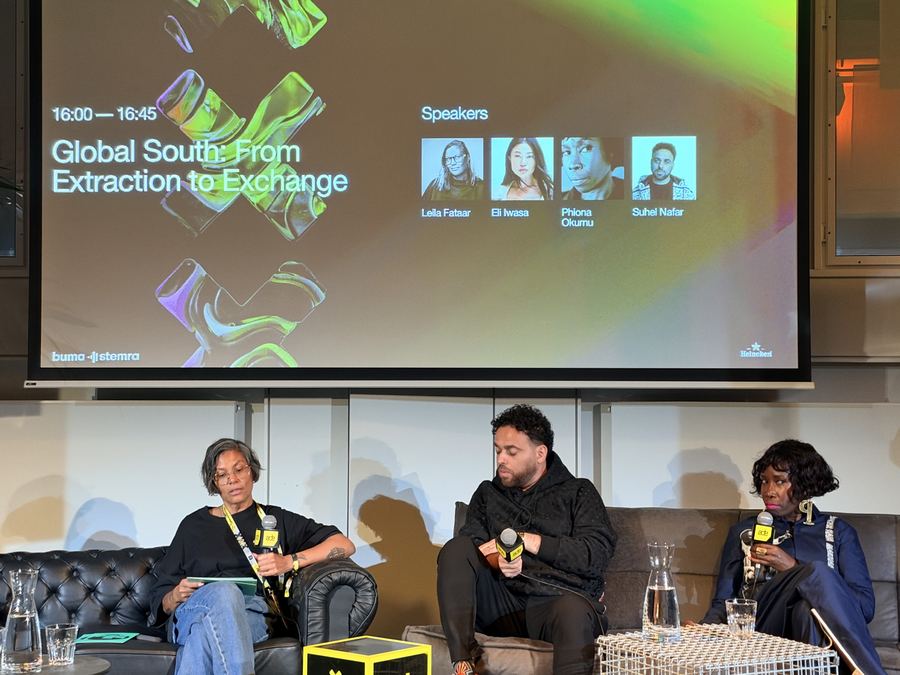
I sat through ADE's sessions on AI: Suno's chief music officer taking questions, a roundtable of artists arguing about training data, the company rebuilding its plumbing with coding agents. I didn't see another industry face from our region in those rooms. I understand why. Our scenes are busy surviving wars, currency collapses and visa queues. But these are the rooms where the export barriers that kept our music inside the region are being torn down, and the terms are being set without us.
Where they already are
The audience is not hypothetical. Niko Partners projected that Saudi Arabia, the UAE and Egypt alone would have 87.3 million gamers and a $2.79 billion games market by 2026, with 76% of players under 35 and Egypt home to the largest player base.
And some of the region was already listening there. Suhel Nafar, now head of EMPIRE's West Asia and North Africa division, ran around 120 playlists at Spotify in 2019. "As I'm looking at some of those playlists, the majority of the streams were coming out of PlayStation [and] Xbox, specifically from Saudi," he told ADE's "Inside the MENA Music Ecosystem" panel. That's one executive's view of one set of playlists in one year. It's also a signal: in parts of the Gulf, the console was a stereo before it was a marketing channel.
Elsewhere, games have become stages at a scale music struggles to match. Travis Scott's Fortnite show in 2020 drew 12.3 million concurrent players. In January this year, Bruno Mars performed inside a Roblox game to 12.86 million at once, a record for a single artist. Roblox alone reported 151.5 million daily users in the third quarter of 2025, with users outside the US and Canada growing 81% in a year.
The money is here. The music isn't.
Our region is not short of gaming money. Saudi Arabia hosts the Esports World Cup. Its 2025 opening ceremony in Riyadh was headlined by Post Malone, with Alesso, Tina Guo and the K-pop star DINO; the official song was performed by DINO, Duckwrth and Telle Smith. No Arab artist was named on either.
The exceptions prove how rare it is. Elyanna's "Ganeni" made the 117-track EA Sports FC 25 soundtrack; Small X and SAIB's "Bloom" is on FC 27; PUBG made "Wayli" with Al Shami. That's close to the whole list we could find, and the biggest of those placements, Elyanna's, came with a major label and management machine behind it.
It's the same pattern part one found on festival lineups: the region pays to bring the world in, and its own artists open for it. When the region's biggest gaming event is built in Riyadh and the music is imported, that's not a talent gap. It's a choice.
The method: seeding
If our artists aren't on the stage inside the game, they can still be in the community around it. Ian Rasmussen, founder of the music marketing company Sketch, explained the method at ADE's music-marketing panel.
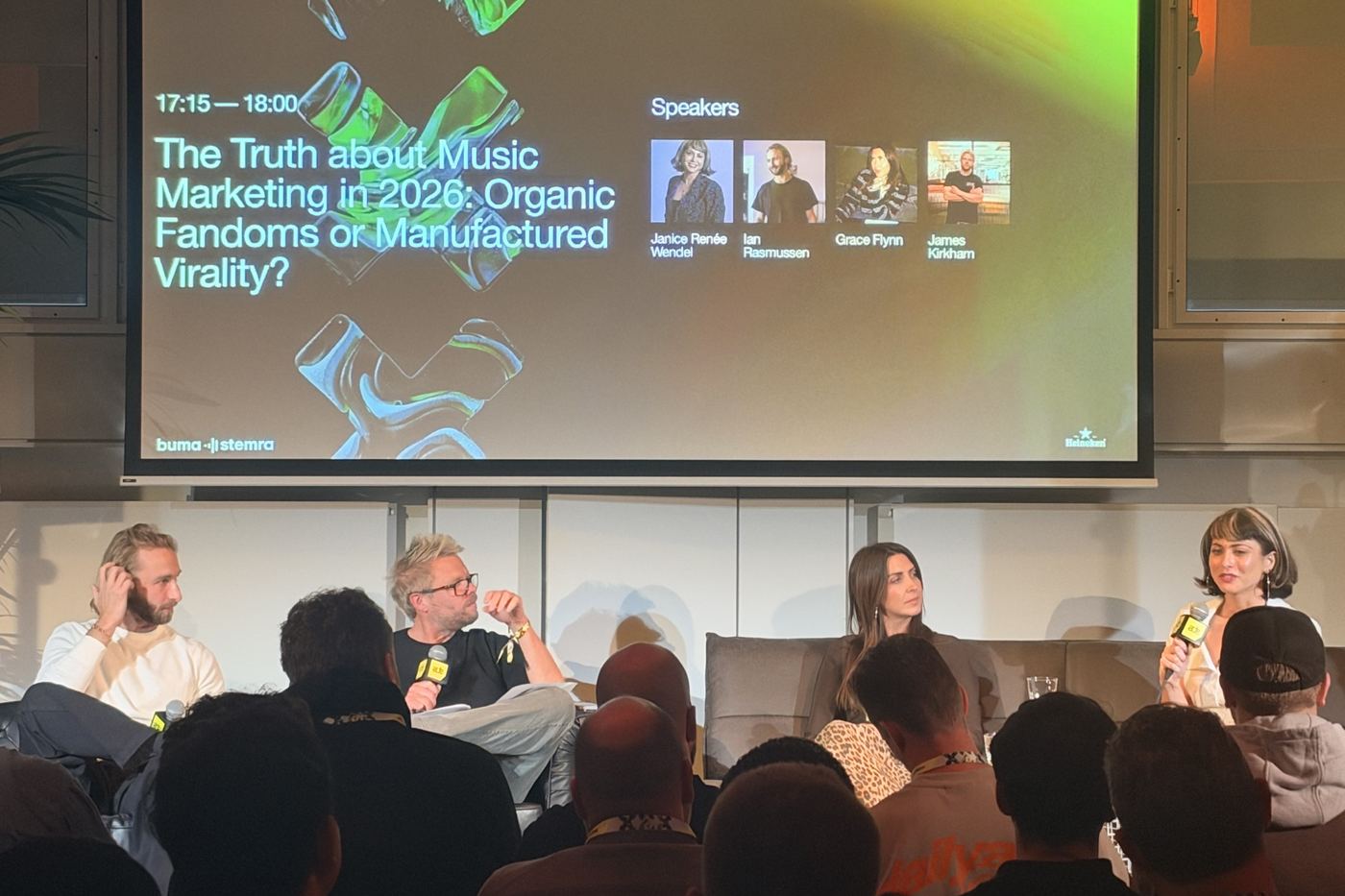
Sketch runs Discord servers "filled with tens of thousands of creators," he said, organised by niche: gaming, film and TV, sports, anime. "We take our records, really embed them with these communities at scale." By his account, a record might get $1,500 to $2,000 of seeding, produce 200 to 300 creator posts, and the team will "rinse and repeat these methodologies until we find a record that's really poking its head."
The discipline is the calendar. "We have an active calendar at all times, kind of just tracking what big moments are happening in a given week," Rasmussen said. "Maybe it's a Marvel movie coming out, we'll attack the Marvel movie editing community." He described a Brazilian funk record that came back to life months after release when a creator used it for a Lamine Yamal edit during the World Cup. "You don't actually know: maybe two years later they'll pop back up."
A SWANA version would build its calendar around moments the rest of the industry doesn't track. Ramadan, and the TV series season that runs through it, when the whole region watches the same shows at the same hour. Eid. The Arab Cup and AFCON. The Saudi Pro League and its global stars. Every one of those moments has an edit community, and almost none of them are being seeded with SWANA music on purpose. That's the cheapest export route we found at ADE, and, as far as we could find, one few SWANA teams are using deliberately.
It has limits, and they're ours. In the UAE, Discord's text chat works but voice calls are blocked, like WhatsApp and Skype calls. People get around it in a browser; console players can't. Any SWANA seeding plan has to be built for the platforms people can actually use where they live.
The counterweight
Seeding works. That's exactly why it needs a warning label.
"If the dance floor dies," Tala Mortada of Beirut's Factory People said at ADE, "you'll have table bookers that are going to dictate the sound. We're all going to essentially be playing Afro house remixes of pop music." She named the force behind it, too: without institutions backing artists, "we allow people to keep being dictated by the algorithm of TikTok to shape their taste."
Grace Flynn, who works on Skepta's Más Tiempo, offered the other half of the answer on the marketing panel: "Everything for me comes back to brand." Más Tiempo's parties run on house edits of familiar songs, and this year it held a season-long Saturday residency at Hï Ibiza, on the same nights as Black Coffee. Seeding gets a record noticed. A brand, and a room, decide whether the audience stays.
Brazil shows how the two fit together. Its funk travels through edits and short videos, and as Mochakk told ADE, "people like it abroad even without understanding what the vocals are saying." But Brazil's biggest DJs also own the platforms their scene travels on: Mochakk's events abroad always bring a Brazilian act, and his label exists to release new producers. The algorithm carries the sound. The artists own the rooms it lands in.
We're all going to essentially be playing Afro house remixes of pop music.
Tala Mortada, Factory People, Beirut
AI: the rooms we skipped
The same week, the AI music business was rewriting its terms in Amsterdam.
In September, Suno launched its V6 models, which it says were built on licensed data from Warner Music Group, BMG and the distributor Believe, and retired its older models. The day before, it admitted those earlier models had been trained on YouTube videos. Sony and Universal are still suing; so is the artist Jason Isbell.
At ADE, Suno's chief music officer, Paul Sinclair, who spent more than two decades at Warner Music Group, including Atlantic Records, before joining in 2025, took the questions. "We're not a record label, we're not a publishing company," he said. "We do not take ownership of anything." Pressed by a questioner on stage, he said: "If you pay for Suno, you own the rights." The fine print is narrower. Suno's current terms, revised in August, assign paying subscribers "all of its right, title and interest" in output that Suno owns, and in the same document make "no representation or warranty" that "any copyright will vest" in it. Last December, after its Warner deal, Suno had told subscribers they "generally are not considered the owner" of the songs they generate, as Music In Africa reported. Suno can only hand over what it has, and it won't promise there's a copyright to hand over. For any SWANA artist putting their name on a Suno track, that gap matters.
Sinclair's pitch is a new economy of derivatives. "When people create derivatives, I think that's the opportunity for the music industry," he said. "I don't believe that it's just record labels and publishers. I think it should also be unsigned artists in the world." Who sets the terms? "That's for the industry to decide."
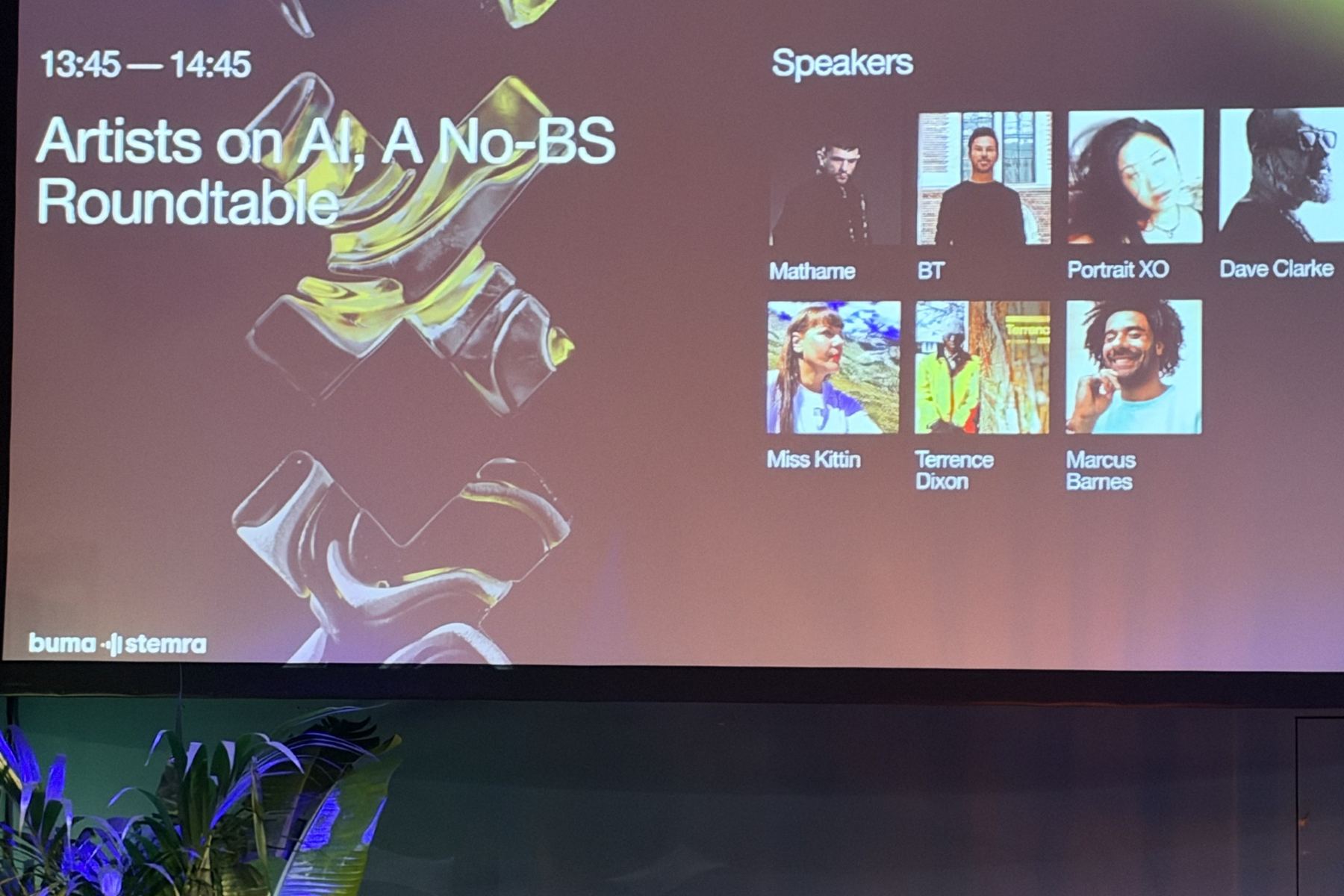
The artists in the next room weren't convinced. "Companies like Suno couldn't have released what they did with [a] remuneration system, where everyone who was part of [the] data [got paid], but that didn't happen," said Portrait XO, the Germany-based artist who builds with AI herself. "It's not like I'm anti-innovation." BT, the electronic pioneer, was angrier and more pragmatic at once. "We have righteous anger... it's totally bullshit what's happened, and it's real," he said of the scraping. "Am I going to go and sue these people and spend my life [on that]? No." His answer is to get in the room: "If we just take our pitchforks out, or we just go, like, full Amish, we're not going to be included in the conversation. And I want artists in this conversation." He was scathing about Timbaland, one of Suno's most famous advocates, who has compared the backlash against AI music to early criticism of Auto-Tune. BT called that kind of talk "so repulsive and insulting." (Disclosure: BT co-founded SoundLabs, which makes AI music tools and works with Universal Music Group, so he speaks as a competitor.)
I want artists in this conversation.
BT, at ADE's artists-and-AI roundtable
Why it's our fight
This isn't a Western argument we can watch from a distance. It's already in our catalogues and our charts.
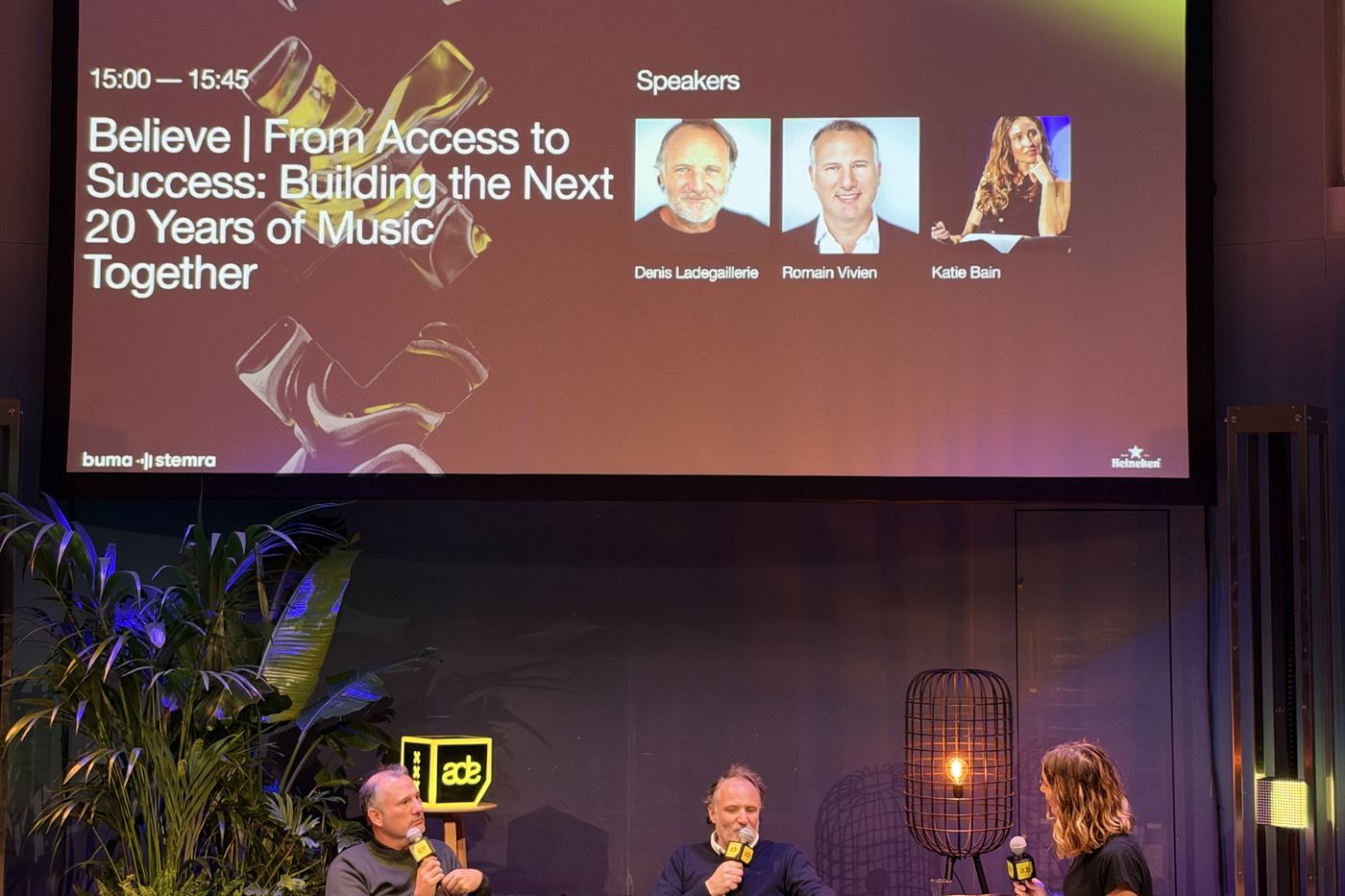
On 8 September, Suno announced a global deal with Believe: Believe and TuneCore artists and labels "can choose to opt in" to new licensed products and be paid for it. Believe distributes independent music across the region, and its Artist Services work with names like Nancy Ajram, Angham and Ragheb Alama. Opting in sounds simple. For a legacy Arabic catalogue it isn't. At ADE, Misty described major labels sitting on 90s Arabic pop asking "why should we work and put our effort into this?" when DJs wanted to license samples. Suhel described old-school labels that "didn't even want to put their music on Spotify." Ghazi described catalogues changing hands as "a bunch of spreadsheets" in a Dropbox. If nobody is sure who owns a recording, who gets to opt it into an AI model, and who gets paid when they do?
The charts have already decided part of the answer. In July, the IFPI applied new rules to the charts it runs directly, including the Official MENA Chart: a record made with generative AI is excluded where there's reason to believe the AI service wasn't "properly authorised and lawful," or the record isn't "substantially human made," and AI use has to be "appropriately signalled to consumers." With Sony and Universal, both IFPI members, still suing Suno, whether a Suno track could ever chart in our region is an open question. It's a question our industry should be answering in the room, not reading about afterwards.
AI is also changing who gets to build the pipes. Supply Chain's chief product officer, Stephen White, credited "agentic development and the evolution of what's happening with AI" for what his team built over the past year. BT said he can prototype in half an hour what used to take two programmers months. Shabakeh is built the same way: we use AI tools in research and production, as a method, not an identity. That's exactly why we were in those rooms.
What SWANA should do
- Clean the data before anyone opts in. No legacy catalogue should go into an AI licensing deal until its rights and metadata are settled. Otherwise the wedding-singer story from part one repeats, with AI money this time.
- Put our artists inside our own events. If the region funds the Esports World Cup and the biggest festivals, its artists belong on the opening ceremony and the official song, not only on the second stage.
- Build a SWANA moment calendar. Ramadan TV season, Eid, the Arab Cup, AFCON, the Saudi Pro League: seed our music into the edit communities around them, through platforms people can actually use here.
- Own the rooms the algorithm feeds. Seeding without residencies, labels and parties of our own just exports a sound for someone else to monetise.
- Show up. Next ADE, and every room where AI terms are negotiated, SWANA should have people at the table.
Back to the lobby
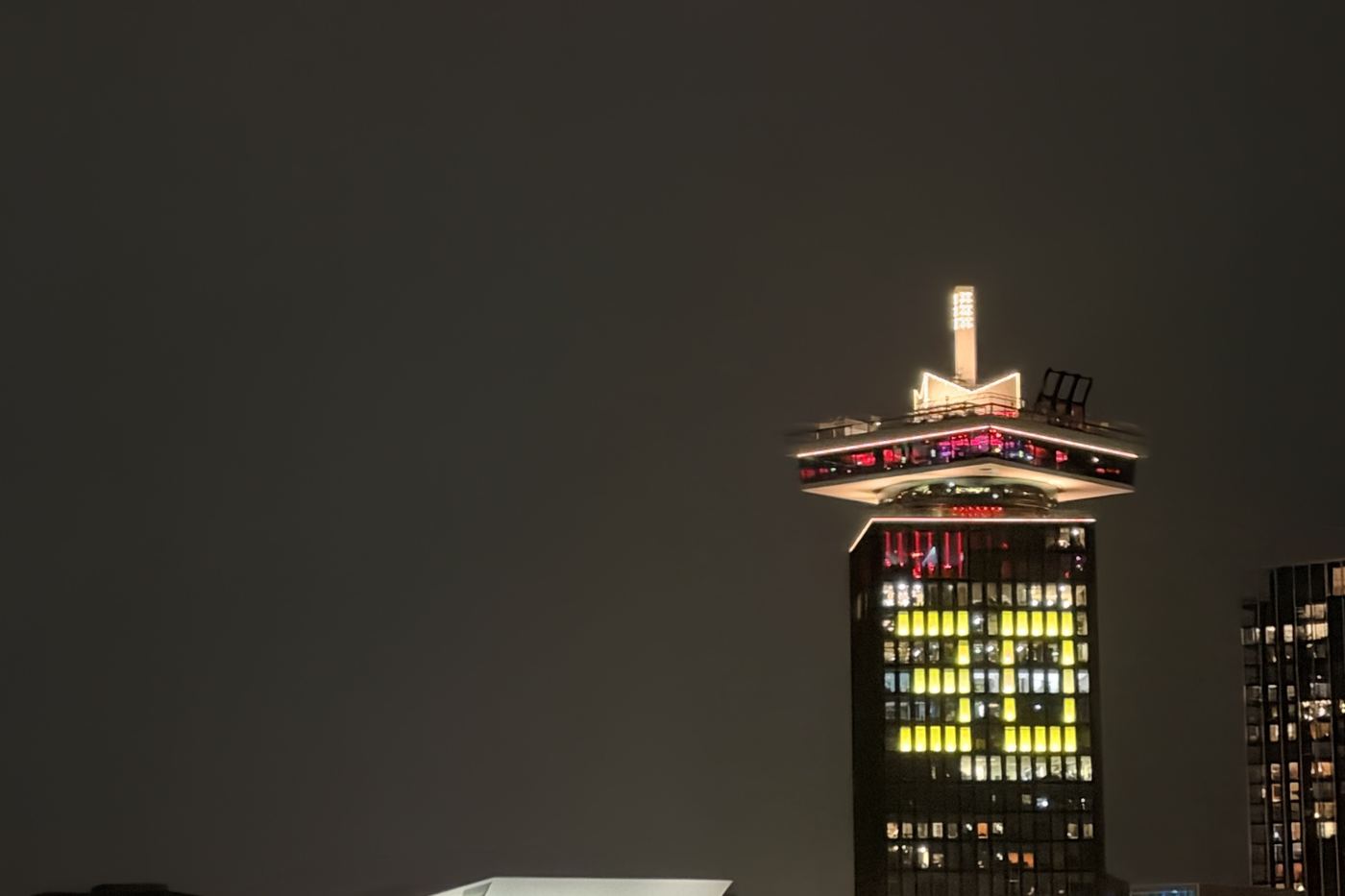
In part one we asked whether the next Bad Bunny can come out of SWANA. Here's the part of the answer this piece adds: that artist's first fans may meet in a game lobby before they ever meet at a show, and the song they meet over may have been seeded into an edit, licensed into a model, and charted, or not, under rules written this year. Whoever owns those rooms owns the next decade. Right now, it isn't us.
How we reported this
Quotes come from on-record ADE panels Shabakeh attended between 21 and 25 October 2026. Figures come from Niko Partners, Music Business Worldwide, Roblox's shareholder letter, the IFPI, Suno's terms of service and the official Esports World Cup site, linked below. The observation about ADE's AI rooms and the UAE's limits on Discord calls are first-hand. Shabakeh is independently conceived and edited and uses creative tools, including AI, in research and production. Disclosure: BT co-founded SoundLabs, an AI music tools company.
Bader Jayoushe
Shabakeh, at ADE, Amsterdam, 21–25 Oct 2026
File 003, part two of two
Sources
- tbreak: PUBG MOBILE x Al Shami, "Wayli"
- Niko Partners via GameDev Reports: Saudi Arabia, UAE and Egypt gaming markets
- MBW: Bruno Mars Roblox record
- Engadget: Travis Scott's Fortnite concert drew 12.3 million concurrent players (Apr 2020)
- Roblox Q3 2025 shareholder letter, SEC filing
- Esports World Cup 2025: official song and opening ceremony
- SceneNoise: Elyanna on FC 25 · Mille World: Arab artists on FC 27
- MBW: Suno and Believe
- MBW: Paul Sinclair joins Suno as Chief Music Officer (Jul 2025)
- MBW: Suno launches V6 with WMG, BMG and Believe (Sep 2026); ecoustics on V6, the lawsuits and Suno's YouTube admission
- Suno Terms of Service (revised 10 Aug 2026, read 29 Oct 2026) · Music In Africa: Suno's ownership terms
- MBW: Believe Artist Services in the region
- IFPI: AI chart eligibility principles
- MusicRadar: Timbaland on Suno (Oct 2024)
- DJ Mag: Skepta's Más Tiempo residency at Hï Ibiza (Mar 2026)
Can the Next Bad Bunny Come Out of SWANA?
باد باني الجاي رح يطلع من عنّا؟